Whether you’re new to Project Management or already have some experience, this article provides a quick guide on how milestones can help you manage your localization project.
Do you ever wonder what is the difference between Globalization and Localization?
Find out how to go global with a suitable International Business Strategy!
Did you ever wonder if Jaskier from The Witcher series had the same name in different languages? Or how accents are represented in different languages? Only a few people know that cultural and language differences impact TV series and movies, and that localization affects our daily life in unexpected ways. Let’s look at some examples.
As you might know, Netflix has grown to become one of the biggest broadcasting services on the Internet. Expanded over 190 countries and supporting 26 languages, Netflix did and still have to go through multiple localization processes to make every content globally accessible. How does a streaming media as huge as Netflix handle multilingual localization across the world?
Another day, another product launch. In today’s global market, launching a product likely means that you will also launch multilingual documentation. Some companies have internal translators, but many call on external language vendors to translate their content. If you are one of these companies, here are three tips for building a healthy relationship with your language service provider:
These days, technical communicators are generally aware that translators almost always use computer aided translation (CAT) tools to work more quickly and produce a translation with the highest degree of consistency possible – given the source text and reference material provided.
The question of what defines a “good” translation is about as old as the discipline of translation itself. But whereas international quality standards have been established in many industries for decades, they are a rather recent development in the translation industry. The ISO 17100 standard is the first international quality standard of its kind for translators and was only introduced in 2015. It defines the minimum standards translation service providers need to adhere to in order to deliver quality translations.
Businesses today are able to reach a global audience. But when targeting different markets, they should be aware of the importance of content localization.
Content writing and localization – rigidly separated or mutually dependent? One aspect is becoming clearer every day in the industry: developing a content strategy keeping localization in mind from the earliest stage of content production helps companies save time and money, increase the quality of translations and, ultimately, better satisfy your customers.
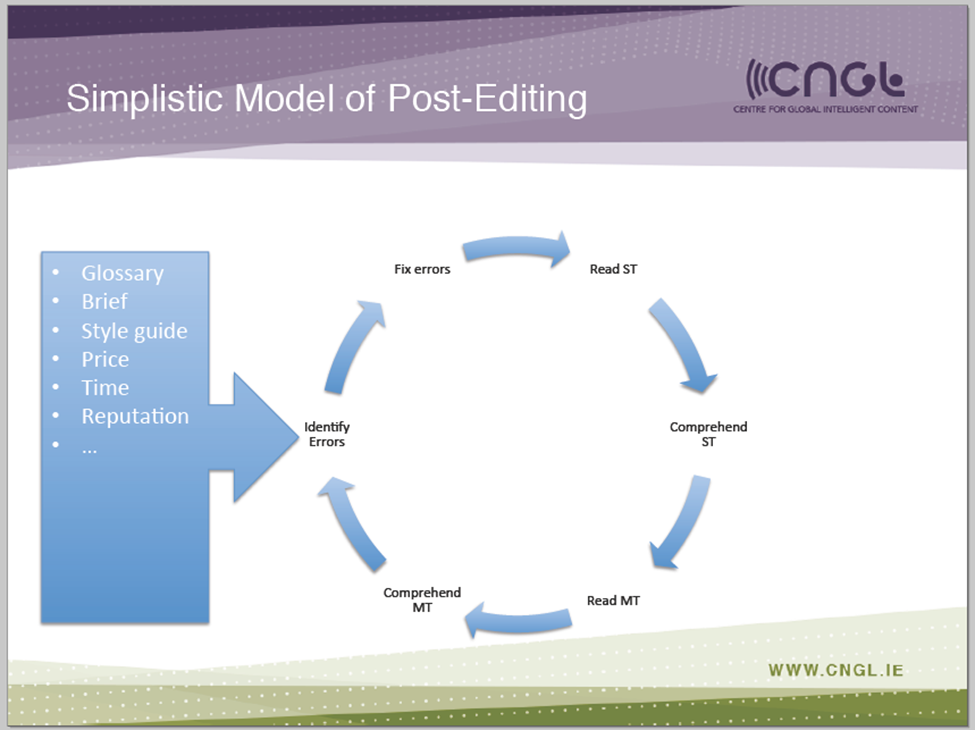
Machine translation post-editing is the process of improving a machine-generated translation with minimal manual labour. It is a new skill which many translators are not familiar with. However, with a bit of practice, it can speed up the process dramatically.